

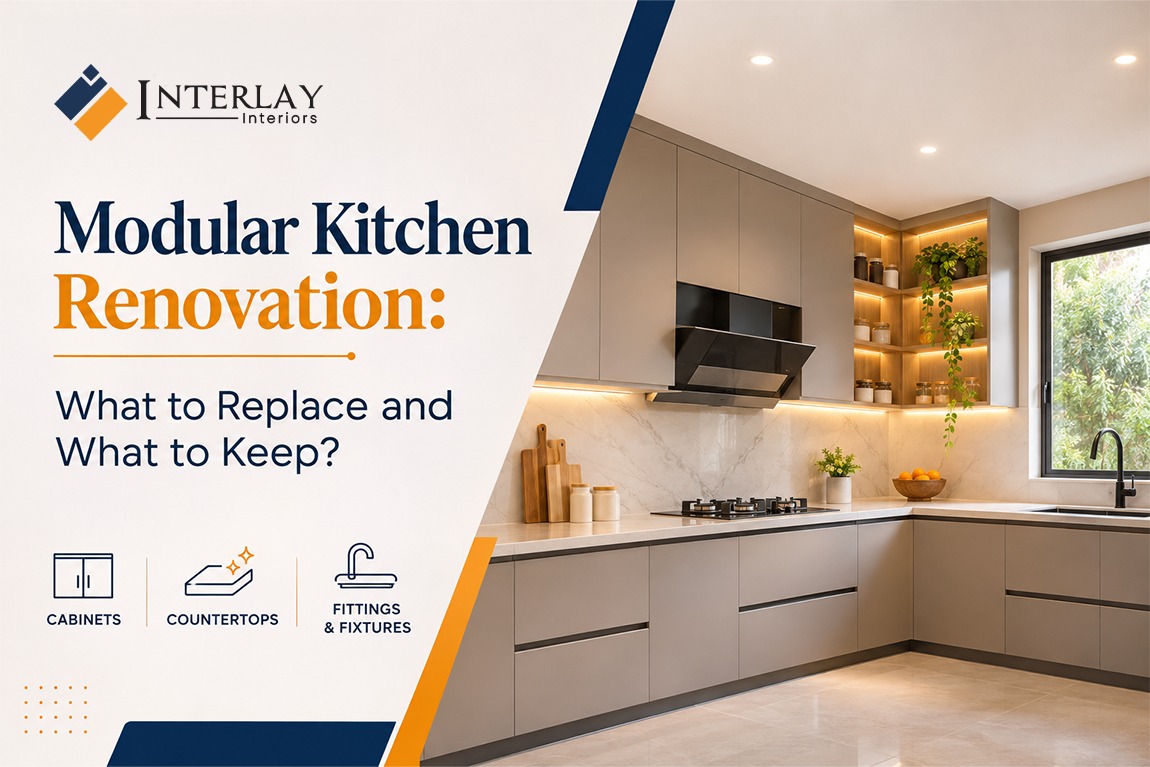
Modular Kitchen Renovation: What to Replace and What to Keep?
A kitchen built a decade ago can gradually lose its efficiency when cooking habits, family size and storage needs change. Moisture, heat and daily use also loosen fittings and make the finishes look dull over time. A planned modular kitchen renovation addresses these problems without changing the entire look of the kitchen. It improves working efficiency and appearance at a lower cost than full replacement.
The key lies in knowing which components have failed and which remain reliable. Homeowners comparing options for the best modular kitchen in Jaipur benefit from making that distinction first.
When Does Your Modular Kitchen Need Renovation?
A kitchen does not fail all at once. Individual parts deteriorate at different times. The first symptoms are easy to dismiss until they begin to affect cooking or hygiene. Knowing them beforehand helps homeowners plan modular kitchen upgrades in stages rather than waiting until a sudden breakdown.
The following signs indicate that renovation deserves attention-
- Cabinets that show swelling, flaking laminate or a damp smell have usually absorbed moisture.
- An outdated layout that forces constant walking between the sink, hob and refrigerator, or leaves utensils without proper storage, no longer suits the household.
- Cracked countertops, stained surfaces and worn finishes become difficult to keep hygienic.
- Poor lighting over work areas, a chimney that fails to clear smoke and badly placed appliances reduce comfort and safety.
- A growing family, a new cooking routine or the addition of an oven or dishwasher may require a different arrangement.
Modular Kitchen Components You Should Consider Replacing
Replacement should follow condition, not age alone. Parts that compromise hygiene, safety or stability are mostly prioritised. The remaining items can be assessed afterwards.
The selective approach forms the basis of effective modular kitchen remodelling because it directs the budget toward genuine problems.
Damaged or Moisture-Affected Cabinets
Cabinet replacement becomes necessary once the carcass loses its strength because surface repairs cannot restore a weakened board. Base units near the sink and dishwasher are affected first, as leakage and humidity move towards the bottom panel into the core material. Swelling at the edges is the earliest visible sign, followed by laminate that peels or bubbles. Dark patches of mould on the inner walls point to prolonged dampness and a hygiene risk. Structural damage appears as sagging shelves, loose hinge screws and shutters that no longer align.
When these symptoms are present, replace the affected units with moisture-resistant material such as boiling waterproof plywood or HDHMR board. However, dry upper cabinets may stay in place.
Old Countertops and Backsplashes
A countertop should be replaced when cracks, deep stains or chipped edges begin to trap food residue and moisture. Burn marks and surface swelling around the sink show that the material has reached the end of its useful life. A backsplash with loose tiles or darkened grout needs attention for the same reason because water seeps into the wall behind it.
Modern materials reduce this maintenance burden. Quartz offers a non-porous surface that resists stains. But hot pans should be placed on a trivet. Granite tolerates heat well and suits heavy cooking. Sintered stone and solid surface slabs have fewer joints, which leaves less space for dirt. Glazed tiles or toughened glass panels behind the hob can be cleaned within seconds.
Outdated Hardware and Kitchen Accessories
Hardware occupies a small share of the budget yet determines how every drawer and shutter performs. Rusted hinges, misaligned drawer channels, broken handles and bent pull-out baskets cause jamming and uneven shutters. Replacing them often restores cabinets that are in good condition.
Soft-close hinges and telescopic channels prevent slamming and reduce stress on the joints. Tandem drawers, corner pull-outs, tall units and bottle racks use depth and height that standard shelves leave idle, bringing everyday items within easy reach. Stainless steel and powder-coated fittings also resist corrosion during humid weather.
Old Kitchen Sink and Faucet
A sink needs replacement when scratches turn deep, rust spots keep returning, or hairline cracks allow water to seep into the cabinet below. A faucet that drips, delivers weak flow because of mineral deposits or shows a corroded body should be changed without delay. Hard water, which is common across Rajasthan, accelerates scaling and shortens the life of older fittings.
Sinks made of modern stainless steel and quartz have thicker gauges, right dampening pads and deep bowls that can hold larger containers. Pull-down faucets with flexible spouts make rinsing easier, and aerators help reduce water consumption. As both items connect to the same plumbing and countertop cut-out, replacing them together avoids repeated disturbance of the work area.
How to Choose the Right Professionals for Kitchen Renovation
Renovation differs from fresh installation because existing cabinets, pipes and walls limit what can be changed. An experienced modular kitchen dealer in Jaipur is able to identify these barriers and offer solutions during the first site inspection. Below are some criteria that can be used by homeowners to judge potential experts.
- Always check experience in renovation projects, particularly those that retain existing cabinets and plumbing.
- Review the photos of previously designed kitchens or visit the finished sites.
- Talk about material quality, hardware brands and the installation process in detail.
- Get a written quote regarding dimensions, time period and cost before work begins.
What Can You Keep During Modular Kitchen Renovation?
Retention is just as important as replacement. Reusing good components reduces expenditure and debris if they fit the revised plan. A thoughtful modular kitchen design works around such elements instead of discarding them.
Strong and Well-Maintained Cabinet Structures
Cabinets free from structural weakness and moisture damage can remain. New shutters, laminates or paint can change their appearance entirely while the carcass continues to serve. A technician should inspect the back panels, base units and fixing points before approving reuse.
Existing Kitchen Appliances
Efficiently functioning chimneys, cooking units, and refrigerators do not need to be disposed of. Compatibility with the new arrangement is essential, which includes the height of chimneys, clearance from all sides and availability of power sockets. Appliances that consume excessive power or perform poorly are better replaced during the same project.
Functional Storage Units
Pull-out units, shelves, spice racks and organisers in good condition can be refitted into the new arrangement. Cleaning, tightening and realigning is usually sufficient. The money saved can be directed to components that need to be replaced.
Existing Plumbing and Electrical Points
Properly installed water lines, drainage and electrical connections can stay wherever they suit the new plan. Relocating them involves cutting walls, repairing tiles and additional labour. So a layout built around existing points reduces cost and disruption.
Smart Modular Kitchen Renovation Ideas to Improve Functionality
Practical improvements provide better performance results than decorative ones. By choosing the right modular kitchen renovation ideas, the project remains within a manageable size and becomes efficient. The following measures suit most Indian households.
- Upgrade cabinet finishes and colours to give the kitchen a uniform and refreshed appearance.
- Add drawer organisers and corner storage to recover space that fixed shelves leave unused.
- Improve task lighting and fit under-cabinet lighting above preparation and cooking areas.
- Create better appliance placement so that frequently used equipment stays within easy reach.
- Choose durable and easy-to-clean materials for shutters, countertops and wall surfaces.
- Improve ventilation with a correctly sized chimney or exhaust fan, and clear the countertop for usable working space.
How to Plan a Modular Kitchen Renovation Within Your Budget
A fixed budget protects the project from gradual cost escalation. The kitchen renovation tips below direct spending toward repairs and upgrades that return the most value.
- Identify essential repairs, such as water damage and faulty fittings, before aesthetic upgrades.
- Set priorities based on the condition of each component and how often it is used.
- Compare material quality and long-term maintenance needs instead of relying on the initial price.
- Reuse functional components, including cabinets and appliances, to reduce expenses.
- Keep a separate allowance of 10% to 15% for unexpected repairs found once cabinets or walls are opened.
Conclusion
Reviewing each element that already exists makes the modular kitchen renovation feasible and economically viable because the useful elements remain while the weak ones get replaced. The use of long-lasting materials that resist moisture and a design based on everyday needs and cooking practices can keep the kitchen reliable and comfortable for many years.
Homeowners who desire professional advice from the best interior designer in Jaipur may contact Interlay for proper assessment, planning and implementation.
FAQs
Can an old modular kitchen be renovated without replacing everything?
Yes, a kitchen with proper cabinet structures can be renovated by changing shutters, countertops, hardware, lighting and accessories. Only units damaged by moisture or termites need replacement, which preserves the budget and shortens the work schedule. The household also spends less time without a functional kitchen.
Which modular kitchen components should be replaced first?
Moisture-damaged cabinets, leaking sinks and faucets, broken hardware and cracked countertops should be replaced first. These components affect hygiene, safety and the stability of adjoining units and postponing them tends to increase repair costs. A professional inspection helps rank each item by urgency.
Is modular kitchen renovation more affordable than a complete replacement?
Renovation costs less than a complete replacement because reusable cabinets, appliances and plumbing points remain in place. The savings depend on the condition of the structure, the materials selected and the extent of layout changes, so a detailed estimate from the installer clarifies the difference.
How long does a modular kitchen renovation usually take?
A renovation project involving shutters, countertops and hardware normally lasts between one and two weeks. For those projects that involve changes in layout, plumbing and electrical work, the time frame could be three to four weeks, based on the condition of the site and availability of materials.