

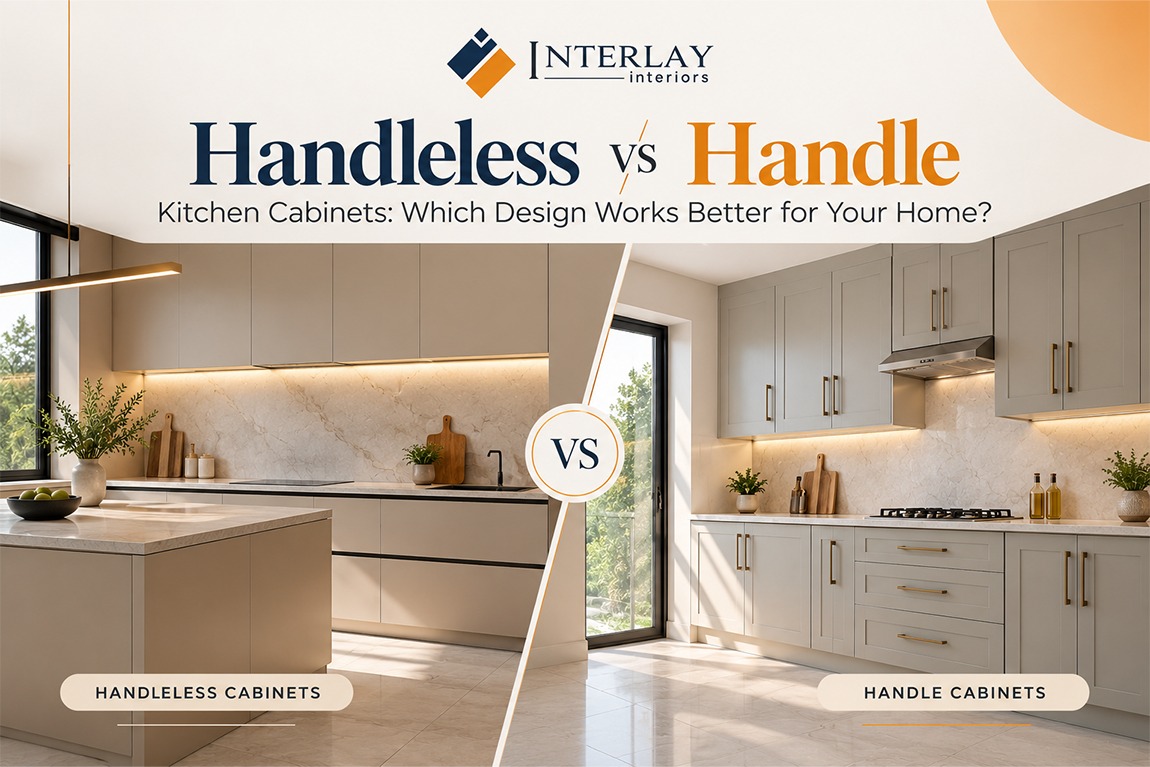
Handleless vs Handle Kitchen Cabinets: Which Design Works Better for Your Home?
Cabinet handles affect a kitchen’s appearance, comfort and daily upkeep. A handleless design gives a neat look. On the other hand, visible handles provide a familiar grip and decorative variety. The most appropriate design generally varies depending on the size of the kitchen, style of cooking, choice of cleaning, budget and kitchen theme.
Comparison of handleless vs handle kitchen cabinets involves assessing not only the looks but also the convenience of opening, ease of cleaning and hardware resistance. It is important to consider these elements before you make your selection of cabinet fronts so that the design aligns with practical needs.
What Are Handleless Kitchen Cabinets?
Handleless cabinets open without conventional knobs or projecting pulls. The grip may be shaped into the door edge, built into a channel or replaced by a push-release mechanism. Each system feels different in use.
Common handleless cabinet systems
- J-pull or integrated grip– A J-shaped edge is formed in the cabinet front, allowing fingers to pull the door or drawer without an added fitting.
- Gola or recessed channel– A channel runs along the frame or between fronts. Fingers fit into it to open the unit, creating a visible line across the cabinetry.
- Push-to-open– A concealed mechanism releases the door when its front is pressed. It needs suitable hardware and accurate fitting, and may require adjustment as the kitchen is used.
Where handleless cabinets work best
These cabinets suit contemporary and minimalist kitchens, open-plan spaces and flat-front layouts with restrained colours. Their uninterrupted surfaces can make a long run look less busy. Since J-pull edges, recessed profiles and push-to-open fittings need different installation and maintenance, the system should be planned with the cabinetry.
What Are Handle Kitchen Cabinets?
Handle cabinets use visible hardware attached to doors and drawers. A handle provides a direct grip and can be discreet or decorative. Available shapes and finishes suit a wide range of interior themes.
Popular handle styles
- Slim bar handles– Suit modern kitchens and wide drawers.
- Knobs– Fit compact doors and smaller drawers, in metal, wood or ceramic.
- Cup handles– Complement traditional or vintage-inspired drawer fronts.
- Decorative handles– Add detail to statement or furniture-style cabinets.
Where handle cabinets work best
Visible handles suit traditional, transitional and contemporary kitchens. They can echo taps, lighting, appliances or cabinet colour. Shape, length and placement matter: a small handle may be awkward on a wide drawer, while a long pull can overwhelm a narrow door. Choose a finish suited to cleaning needs and surrounding materials.
Handleless vs Handle Kitchen Cabinets: Key Differences
Both designs can perform well with suitable components. The table compares key practical points.
| Factor | Handleless cabinets | Cabinets with handles |
| Appearance | Clean fronts with minimal visual interruption | Visible detail and a broad range of styles |
| Opening method | Integrated grip, recessed channel or push mechanism | Direct grip using knobs or pulls |
| Cleaning | Fewer projecting parts, though grip areas can collect marks | Handles and fixing points need regular cleaning |
| Usability | Comfort depends on the chosen system and profile | Provides an easy-to-identify grip for many users |
| Cost | Profiles and specialist mechanisms may add to the total | Available across a wide range of budgets |
| Maintenance | Mechanisms and door alignment may need attention | Loose fittings may need tightening or replacement |
| Design flexibility | Suits streamlined, modern schemes | Fits modern, classic and decorative interiors |
Hardware quality, cabinet proportions and fitting accuracy affect both styles. A poorly fitted push mechanism can frustrate daily use, while a badly placed handle can make drawers uncomfortable. Compare the full specification, not appearance alone.
Advantages and Disadvantages of Handleless Cabinets
Handleless designs appeal to homeowners who prefer clean lines. Their benefits depend on the opening method, finish and fitting quality in a busy kitchen.
Advantages
- Creates a neat, contemporary appearance.
- Avoids projecting handles that may catch clothing in narrow walkways.
- Pairs well with flat shutters and integrated appliances.
- The benefits of modular kitchen design include consistent cabinet lines across a fitted run.
Disadvantages
- Recessed profiles and push mechanisms can raise the cost of selected systems.
- Push-to-open fittings may require adjustment if doors stop aligning or responding as expected.
- Fingerprints, oil and food residue can gather around frequently used grip areas.
- A shallow recess or narrow edge may feel less comfortable for people who prefer a fuller grip.
Handleless cabinets are not automatically easier to maintain. Smooth fronts may wipe clean quickly. But channels near the hob need detailed cleaning. The finish and opening system should guide the choice.
Advantages and Disadvantages of Handle Cabinets
Attached handles provide a familiar grip and suit practical or decorative designs. Their finish can be changed without replacing cabinet fronts.
Advantages
- Offers a clear grip for frequent opening and closing.
- Provides a wide choice of shapes, materials, finishes and price points.
- Allows the kitchen’s appearance to be refreshed by changing the hardware.
- Works with classic, transitional and modern interiors.
Disadvantages
- Projecting handles may catch clothing or disrupt a continuous cabinet line.
- Grease and dust can build up around the handle and its fixing points.
- Screws may loosen with regular use and need tightening.
- Incorrect handle size or placement can make doors harder to grip or feel awkward in use.
Suitable sizing, sound installation and routine care can limit these drawbacks. Choose hardware for cabinet weight and frequency of use, not appearance alone.
Which Cabinet Style Is Better for Your Home?
The better choice depends on use, layout and style. Match the opening system to the household’s habits, not a display kitchen alone.
Choose handleless cabinets if…
- You prefer a minimalist kitchen with clean lines.
- You want a continuous look across a long run of cabinets.
- Your design uses flat shutters and integrated appliances.
- You can manage the chosen opening mechanism’s maintenance needs.
Choose handle cabinets if…
- You prefer a traditional or decorative look.
- You want a visible grip for frequently used doors and drawers.
- You need hardware choices across a set budget.
- You may want to change the finish without replacing cabinet fronts.
What About Indian Kitchens?
Frequent cooking exposes hardware to oil, spice residue, steam and repeated contact. Handles may be easier to grip with damp hands, while recessed profiles need wiping to remove grease. Glossy or dark push-to-open fronts can show fingerprints. These practical issues should guide the choice.
For a modular kitchen in Jaipur, match cabinet style with the layout, storage needs and finish. Keep access clear around the hob, sink, refrigerator and drawers, and check how easily the fronts can be cleaned after meal preparation. Test the opening action before confirming the design.
Factors to Consider Before Choosing
You must evaluate the cabinet design as part of the overall kitchen design. Consider the points below before you approve any designs or order them-
- Make sure the doors and drawers do not obstruct the appliances and walkways, particularly in corner kitchen units and narrow galley kitchens.
- Check whether children, older family members or anyone with limited grip strength can operate the recess or pressure-release system.
- Hiring the best interior designer in Jaipur can help coordinate cabinets with countertops, backsplash, lighting and furniture.
- Check how matte, glossy, textured and dark surfaces show fingerprints, grease and scratches. Confirm suitable cleaning methods.
- Check durability, adjustment options and replacement-part availability. The mechanism should suit each door’s size and weight.
- Compare fronts, handles or profiles, opening mechanisms, installation and likely maintenance, not hardware prices alone.
- A modular kitchen dealer in Jaipur can explain systems, hardware, installation and servicing needs.
Conclusion
The choice between handleless vs handle kitchen cabinets balances a streamlined appearance with a familiar grip. Handleless doors work well in contemporary designs. But visible handles offer aesthetic flexibility and convenience. Usability, ease of maintenance, quality of hardware, and costs are some of the important factors to consider. Compare physical samples and test each opening system before finalising the design with a kitchen professional like InterLay Interiors. You should always ask about care instructions, replacement parts and service access before approving the layout.
FAQs
Are handleless kitchen cabinets better than cabinets with handles?
Neither suits every home. Handleless fronts favour minimalism, while handles provide a visible grip and decorative variety. Choose according to comfort, cleaning habits, layout and hardware quality.
Are handleless kitchen cabinets harder to clean?
It depends upon the system and finish. Flat surfaces are easy to clean. But channels can trap grease, and grip areas can easily catch fingerprints. Follow the selected finish’s care guidance.
Do handleless modular kitchen cabinets cost more?
Push methods or specialist profiles can be more expensive, although other alternatives will suit the same budget as handled cabinets. Compare full specifications and installation charges.
Can handles be added to handleless cabinets later?
It depends on the cabinet front. Later drilling can damage the finish, so ask the installer before making changes.
Are handleless cabinets suitable for small kitchens?
They can suit small kitchens because the fronts have fewer projecting parts. Door swing and drawer access still need careful planning.
Which cabinet style is easier for older family members to use?
If handles are properly sized and located, they provide good grips. An integrated grip can also be comfortable. You should always test samples with the people who will use the kitchen most often.