

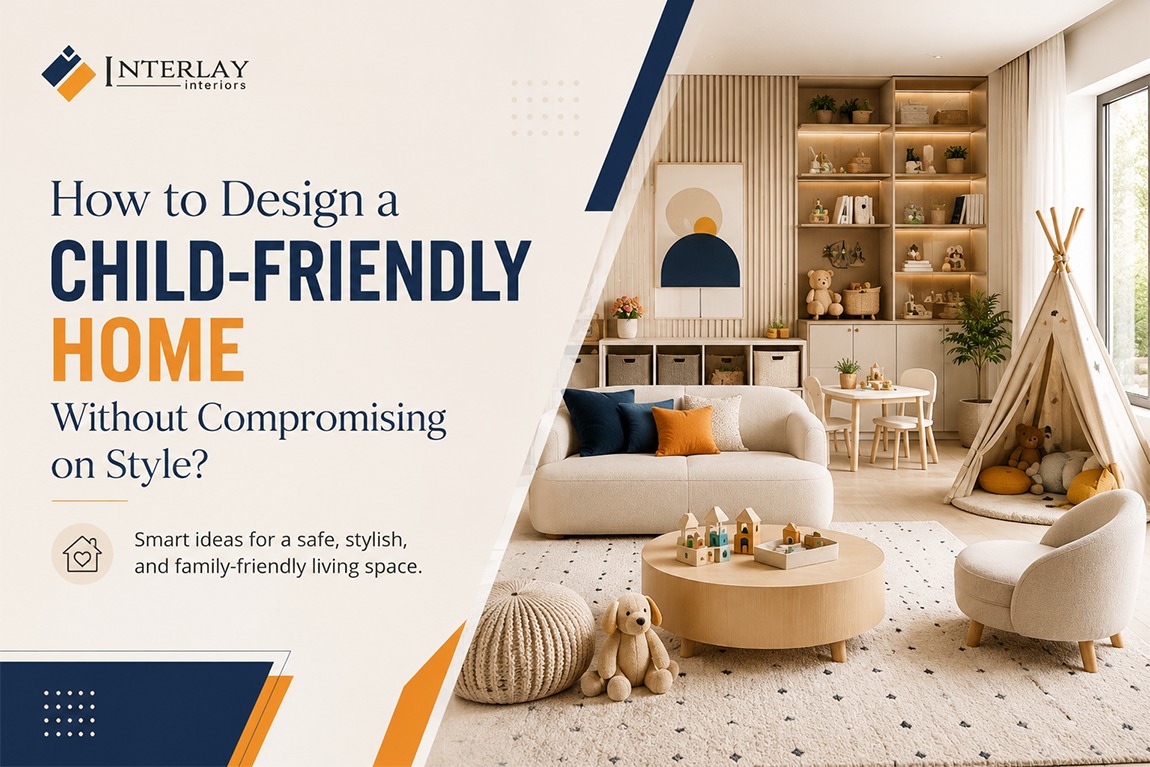
How to Design a Child-Friendly Home Without Compromising on Style?
Which flooring and materials work best for homes with newborns and children? Durable, scratch-resistant floors such as vitrified tiles or engineered wood work best for homes that have children. Pairing it with attractive furniture and decor gives your home a more sophisticated look. But the twist is that designing a home for family means thinking beyond flooring, furniture and attractive decor. Between scattered school bags, art supplies and toddler toys, parents should also weigh durability, safety, storage, comfort and function.
The good news is that a child-friendly home design does not make your house a playroom or sacrifice the home’s overall style. Practical planning and sophisticated design can be comfortably placed together. This article covers furniture, materials, colours, storage and flexible spaces that help you build a home that looks elegant and safe for children.
Quick Answer
A common misconception is that you have to compromise design to make a child-friendly home. In reality, it can be safe, practical and stylish. To make your home child-friendly, begin with sturdy furniture that has round edges, durable and easy-to-clean materials, smart storage and layouts that give your child enough space to move around across the home.
Prefer timeless colours for the main interior. Concurrently, introduce playful elements through artwork, rugs and accessories in suitable places. In addition to that, flexible furniture and adaptable spaces can help the home meet your child’s changing needs as they grow.
What Makes a Home Truly Child-Friendly?
A truly child-friendly home often blends safety, durability and space to move without losing its sense of style. Let’s break down what each of these looks like in practice:
Safety Without Sacrificing Style
A child-friendly home design includes safe furniture placement with objects that have rounded edges. It also means that furniture remains stable with daily use and safe movement around rooms.
Durability and Easy Maintenance
Better space planning means rooms can have easy-to-clean surfaces and durable furniture. For more durability and easy maintenance, use practical fabrics and finishes as well as materials suitable for everyday family use.
Space for Movement and Play
An adaptable space is made with child-friendly furniture that has built-in multiple layers of storage and rounded corners. A spacious room also has open floor space, dedicated activity areas and easy movement between furniture.
Choose Furniture That Is Safe, Stylish and Practical
Furniture selection has a direct bearing on both the safety of a home and its overall appearance. Careful choices protect children while keeping the interior refined. This balance is the foundation of any kid-friendly home design that pleases both parents and children.
Choose Rounded and Stable Furniture
Avoid objects that have sharp edges. Instead, use rounded-edge furniture that can handle daily use. Make sure that all tables, shelves, and cabinets are stable when touched, opened and accidentally pushed. Do not block any passages, doors, windows, and other important places.
Choose Furniture That Grows With Your Child
Select versatile desks that are able to adapt to changing study needs as your child grows. Versatile storage allows you to rearrange the items that are used at different ages: toys, books, study materials, and other stuff that your child uses. Selecting versatile furniture helps to make rooms flexible as the needs of your child change.
Create Smart Storage for a Clutter-Free Family Home
Storage has two purposes in a family home: it helps maintain order and keeps the look of the house stylish. Here is what makes smart storage a crucial part of functional home interiors:
Keep Everyday Items Within Easy Reach
To make everyday items easy to reach, use furniture with low shelves and accessible drawers. Also use Baskets and other easily accessible storage units for books and toys.
Use Built-In Storage to Maintain a Clean Look
Built-in wardrobes not only preserve the look of the room but provide plenty of storage space. To make your home more spacious, use dedicated toy and activity storage, concealed storage units, as well as separate cabinets for books and clothes.
Give Everything a Dedicated Place
Placing everything in its rightful place is one of the simplest space-saving interior ideas for small homes. This approach minimises the amount of clutter, makes cleaning furniture and floors easier, encourages children to organise their belongings and makes the room more aesthetically appealing.
Use Colours and Materials That Work for the Whole Family
A home can feel playful and refined at once when colours and materials are chosen with the same care. This thoughtful balance is what family-friendly interior design is all about.
Start With a Timeless Colour Palette
Neutral and warm colours provide a reliable background for any house interior. Soft colours have timeless appeal and will suit both a baby and a growing kid. Such a colour scheme does not require any modifications and remains consistent no matter what furniture and decor are changed in a room.
Add Playful Elements Through Décor
Once the base is set, you may introduce a certain style using decorations. Artworks, rugs, cushions, curtains and other accent details add colour and personality to a room without altering its foundation. The same goes for decorative elements and other items which can easily be replaced over time as kids change their preferences.
Choose Durable and Easy-to-Clean Materials
A family house requires materials that can withstand everyday use. Washable wall finishes hold up far better than delicate paints where handprints and marks are common. Pairing them with one of the best colour palettes for warm weather homes keeps rooms looking fresh with minimal upkeep. The upholstery must not stain easily, and the flooring or any surface that is frequently used should have the same resistance.
Design Flexible Spaces That Grow With Your Child
A room designed for a five-year-old will not be right for the same child once they are fifteen. This is why following a flexible interior design approach allows you to make your home suitable for different ages of your child.
Create Multi-Functional Zones
Creating rooms with multi-functional furniture means the space should have proper storage units for books, a study area, toys and the children’s or adults’ other belongings. Multi-functional rooms should also be convertible into a sleeping zone, a study zone, and a playing zone as per your needs.
Choose Adaptable Furniture and Décor
Furniture built for a single age often needs replacing within a few years. A thoughtful child-friendly bedroom design often includes desks with adjustable height and easily accessible storage for toys and books. Prefer neutral wall finishes since they age more slowly than finishes chosen for a passing trend.
Make Everyday Spaces Safer and More Comfortable
Child-safe home interiors extend beyond the bedroom. The same considerations apply throughout every space a family uses together.
Plan a Family-Friendly Living Room
Family-friendly spaces often have an area for comfortable seating, open movement space, practical furniture arrangement and organised children’s belongings. This feature makes the room suitable for each member of the family to sit together and share some quality time.
Choose Practical Flooring and Lighting
The flooring in a family house should be durable enough to withstand all the spills, scuffs, and foot traffic. Kids’ room design requires additional cushioning and lighting because they often sit, study or play in that space.
Consider Electrical and Cable Safety
Electrical points should be planned at an earlier stage. Placing sockets and switches far from the places where children move around can help avoid danger. Another factor to keep in mind for a safe home interior design is that cables lying on the walking path are a trip hazard. Therefore, it is better to keep them organised. Heaters and wiring should also be kept out of reach of children.
Common Child-Friendly Interior Design Mistakes to Avoid
Despite all the precautions taken, even the best-designed houses can have several pitfalls when making arrangements for children. These include:
- Focusing on aesthetics rather than safety
- Using fragile materials in busy areas
- Not taking enough storage space into account
- Overusing bright colors
- Planning for a child’s current age only
- Creating a cluttered design
- Neglecting lighting and wiring requirements
- Overlooking adult requirements
How to Balance Safety, Functionality and Style?
To balance safety, functionality, and style in a child-friendly home, you must choose multi-purpose, child-safe furniture that has rounded silhouettes and easily accessible storage solutions. Here are some more factors that can help you balance safety, functionality and style:
Safety
Proper home safety means the room has secure furniture, practical layouts, safe materials and clear movement areas. All of them make the room safe for kids if they wish to play or study in that place.
Functionality
Smart storage solutions help keep everything organised and avoid any clutter. Easy-to-clean surfaces such as luxury vinyl plank (LVP) or porcelain or ceramic tile make cleaning much easier. Use flexible furniture that can adapt as needs change. Also create multi-purpose rooms to support different activities without feeling overcrowded.
Style
At the time of interior planning, opt for furniture that is timeless in nature so that it still looks great even when your kid grows up or your preferences change. Use coordinated colours to make visual consistency across rooms. Add attractive décor and accessories like curtains, carpets, paintings, etc. Keep your home less cluttered for aesthetic appeal.
Create a Home That Grows With Your Family
When designing your house, keep in mind its future uses. Use durable materials, adjustable furniture, versatile rooms and a timeless interior using simple furniture to make your home adaptable and comfortable for both children and adults. A thoughtful home interior design can help combine all these elements.
Create a Home Designed for the Whole Family
A child-friendly home can be safe, functional and stylish when every element is planned around your family’s lifestyle. If you’re planning a home interior, connect with best interior designer in jaipur Interlay Interiors to create a practical and personalised space for your entire family.
Plan Your Home Interior
Conclusion
A child-friendly home does not compromise on style when its interior is planned smartly. Using safe furniture with rounded corners, durable materials and smart storage makes everyday life easier. Also, using timeless colours and adaptable decor helps you maintain a sophisticated look for your home. Try out flexible layouts so that a room can be used for multiple activities. Lastly, attentive planning with the assistance of a home interior designer in Jaipur can help to make your house functional, comfortable and welcoming for both children and adults.
FAQs
1. What makes a home child-friendly?
A comfortable, safe, user-friendly, and easy-to-clean home would be considered child-friendly.
2. How can I make my home safer for children without compromising on style?
Safety in a home is achieved through round-edged furniture, fixed high furniture, durable finishes, and unobstructed walkways within the house.
3. What type of furniture is best for a child-friendly home?
Furniture that is sturdy, stable and made from durable material will do well.
4. Which colours work best for child-friendly interiors?
Light and soft colours are the best for child-friendly interiors.
5. How can I organise toys in a child-friendly home?
Toy organisation can be done using simple and reachable storage such as baskets, drawers and cabinets.
6. How can I design a child’s room that grows with them?
The best way is to select adjustable furniture, flexible storage and timeless colours.
7. What materials are best for a family-friendly home?
Luxury vinyl plank (LVP) flooring, quartz countertops, performance fabrics (Crypton/Sunbrella) upholstery and scrubbable acrylic wall paint are some of the best materials for a family-friendly home.
8. Can an interior designer help create a child-friendly home?
Yes, an interior designer will help you make a comfortable home for both your children and yourself.